Forest Life - Strengthening community-based institution for livelihood and ecological security in Daringbadi block, Odisha
Jagruti has initiated efforts to facilitate the effective implementation of the FRA (Recognition of Forest Rights) in the region. The organization supports communities in securing legal rights over traditionally used land and forest resources, while also promoting sustainable forest-based livelihoods. Its approach integrates rights recognition with conservation, natural resource management, and enterprise development.

Forest Life - Strengthening community-based institution for livelihood and ecological security in Daringbadi block, Odisha
Jagruti has initiated efforts to facilitate the effective implementation of the FRA (Recognition of Forest Rights) in the region. The organization supports communities in securing legal rights over traditionally used land and forest resources, while also promoting sustainable forest-based livelihoods. Its approach integrates rights recognition with conservation, natural resource management, and enterprise development.
Forest Life - Strengthening community-based institution for livelihood and ecological security in Daringbadi block, Odisha
Jagruti has initiated efforts to facilitate the effective implementation of the FRA (Recognition of Forest Rights) in the region. The organization supports communities in securing legal rights over traditionally used land and forest resources, while also promoting sustainable forest-based livelihoods. Its approach integrates rights recognition with conservation, natural resource management, and enterprise development.
About the Project
Project Snapshot
Status
Active
Collaborators
Azim Premji Foundation
Focus Areas
Natural Resource Management
Scheme
Livelihood

Introduction
Forests play a vital role in the lives and livelihoods of tribal communities and other traditional forest dwellers in Kandhamal. They provide essential resources such as food, fodder, and shelter, and serve as a critical source of livelihood, especially during agricultural lean periods.
However, access to forest resources has historically been restricted due to the non-recognition of traditional rights and the enforcement of stringent forest laws. This has created challenges and uncertainties for forest-dependent communities.
In this context, the Scheduled Tribes and Other Traditional Forest Dwellers (Recognition of Forest Rights) Act, 2006 commonly known as the Forest Rights Act (FRA)—emerges as a landmark legislation. It seeks to restore the traditional rights of tribal and forest-dwelling communities over forest land and resources, ensuring their livelihoods and dignity.
Recognizing this, Jagruti has initiated efforts to facilitate the effective implementation of the FRA in the region. The organization supports communities in securing legal rights over traditionally used land and forest resources, while also promoting sustainable forest-based livelihoods. Its approach integrates rights recognition with conservation, natural resource management, and enterprise development.
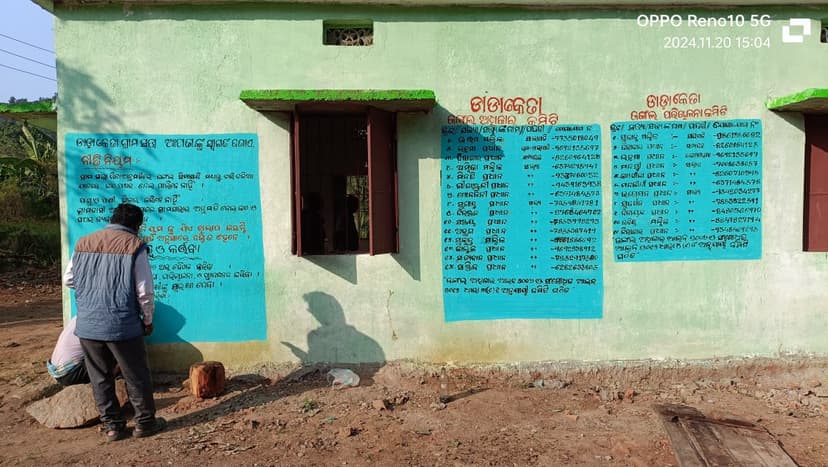
As part of this initiative, Jagruti is facilitating the development of forest conservation and management plans across 40 villages. The Community Forest Resource Management Committee (CFRMC), constituted under the FRA, plays a central role in preparing and implementing post-CFR conservation and management plans. These plans are dynamic and can be adapted based on community needs.
The initiative also emphasizes strengthening local institutions such as Gram Sabhas, Forest Rights Committees (FRCs), CFRMCs, and Producer Groups (PGs). By empowering these institutions, the program promotes community-based forest management, ensuring ecological sustainability while enhancing livelihoods.
Objectives of the project:
Development Objective: To ensure livelihood security of tribal and other forest-dwelling communities through right recognition, strengthening local self-governance and improving access to social security.
Immediate Objective:
1. To facilitate recognition of rights (Individual Forest Rights/Community Forest Rights/Community Rights) under the Forest Rights Act for the resource-dependent to enhance livelihood and tenurial security.
2. To ensure collective procurement and trade of minor forest and agriculture produce through, value addition and processing for livelihood enhancement.
3. To empower grass root Panchayati Raj Institutions to establish democratic local self-governance
4. To facilitate access and convergence of various schemes and entitlements of the government meant for tribal and weaker sections of the society
Strategy:
The project adopted a multi-layered strategy to strengthen local institutions and improve livelihood security. This included
v Capacity building of Gram Sabhas for participatory decision-making and village development planning
v Capacity building of Forest Rights Committees (FRCs), Community Forest Resource Management Committees (CFRMCs), Self-Help Groups (SHGs), and community federations.
v Regular meetings with line departments to promote convergence with government schemes and programmes
v Strengthening women’s leadership and promoting collective enterprises. A strong emphasis was placed on women’s leadership and collective enterprises, enabling women to play an active role in forest protection, decision-making, and livelihood activities.
Demography:
Name of GP | No. of Villages | No. of Households | ST Households | Total Population |
Badabanga | 18 | 1,214 | 953 | 5,302 |
Danekbadi | 8 | 850 | 580 | 4,084 |
Sonepur | 14 | 1,051 | 713 | 4,802 |
Total | 40 | 3,115 | 2,246 | 14,188 |
The intervention covered three Gram Panchayats and 40 villages, reaching 3,115 households and actively engaging 21,032 community members through Gram Sabha meetings, awareness campaigns, and capacity-building initiatives. The programme adopted a rights-based and participatory approach to empower communities to claim their legal entitlements and sustainably manage forest resources.
1. Staff Capacity-Building Training on the Forest Rights Act (FRA)
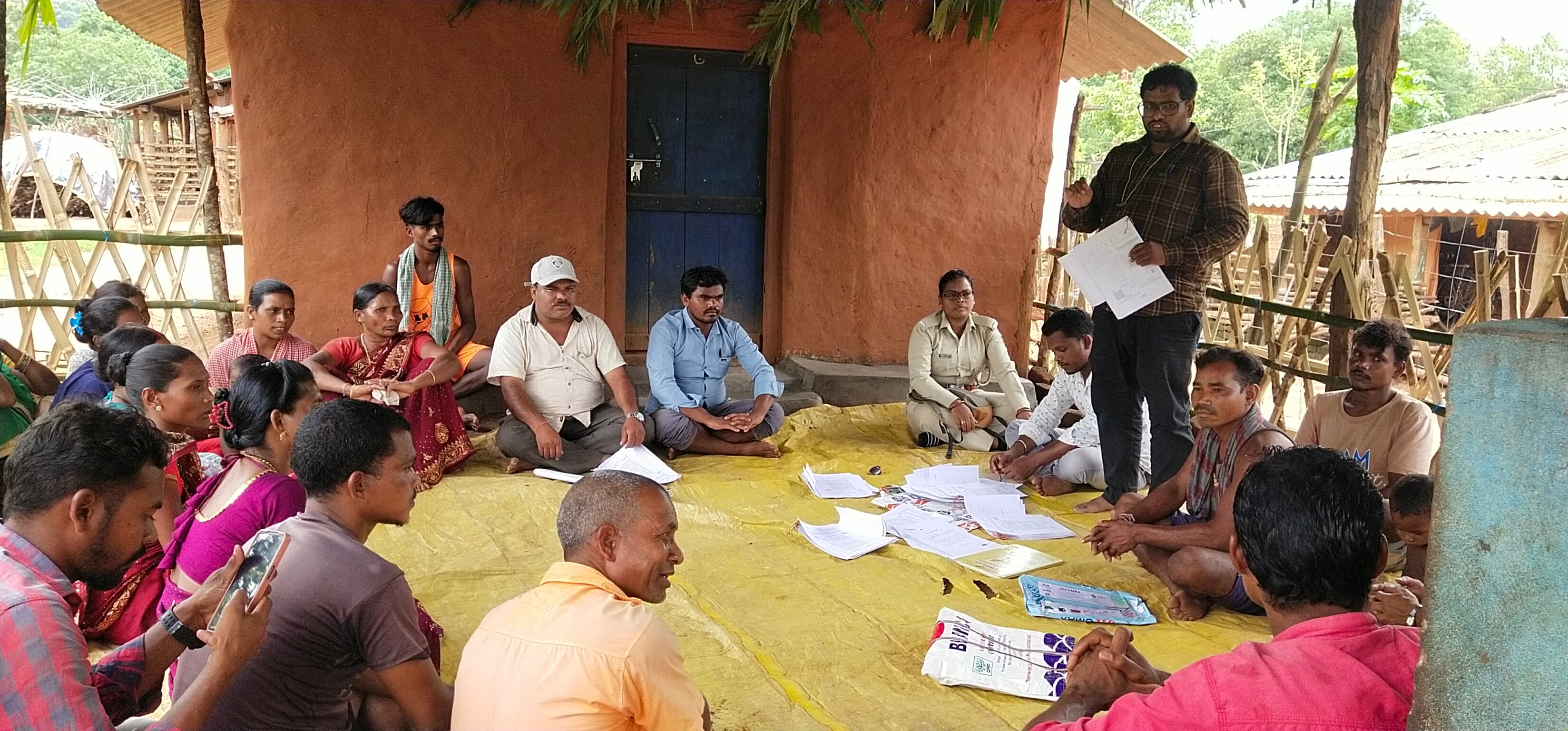
During this year Jagruti strengthened its implementation of the Forest Rights Act (FRA) through targeted capacity-building initiatives for staff and community leaders. A three-day training for 13 staff members, facilitated by Mr. Susanta Kumar Dalai, focused on key FRA provisions, including Individual Forest Rights (IFR), Community Rights (CR), and Community Forest Resource Rights (CFR), with an emphasis on the role of Gram Sabhas in forest governance.
This was complemented by a project formulation training involving 24 participants, including staff and FRA community leaders (15 ST and 9 OTFD; 6 women and 18 men). The training built skills in developing community-based project proposals aligned with FRA provisions and government schemes.
Further strengthening these efforts, the Azim Premji Foundation organized a four-day state-level FRA training in Khorda, Bhubaneswar for partner organizations across Odisha, facilitated by the APF team and Nirmal Sir as the key resource person.
Across all trainings, strong emphasis was placed on FRA, Act and Rule, Community Forest Resource Management (CFRM) and the preparation of CFR Management Plans, including participatory planning, resource mapping, conservation strategies, and livelihood integration. Participants were also trained on the functioning of Community Forest Resource Management Committees (CFRMCs) and alignment with Ministry of Tribal Affairs (MoTA) guidelines.
These initiatives have enhanced the capacity of staff and community leaders to support Gram Sabhas, strengthen local governance, and implement sustainable forest management practices, contributing to improved livelihood security for forest-dwelling communities.
Project Formulation Training on FRA and Forest Resource Management
During the reporting period, a training on project formulation under the Forest Rights Act (FRA) and Forest Resource Management was conducted for 24 participants, including 13 staff members and FRA community leaders. The session was facilitated by Nirmal Sir, an FRA expert and consultant.
The participants included 15 Scheduled Tribe (ST) members and 9 Other Traditional Forest Dwellers (OTFD), with a gender composition of 6 females and 18 males, representing FRA community leadership.
The training focused on developing effective project proposals based on Community Forest Resource (CFR) rights and sustainable forest management practices. Participants were guided on assessing community needs, integrating FRA provisions into project design, and preparing structured plans aligned with relevant government schemes and guidelines.
Special emphasis was placed on Community Forest Resource Management (CFRM) and the preparation of CFR Management Plans, including participatory planning, resource mapping, conservation strategies, and livelihood enhancement.
Overall, the training enhanced participants’ capacity to design practical, community-driven projects and effectively support Gram Sabhas in planning and implementing sustainable forest-based initiatives.
2. Training of Community Forest Resource Management Committees (CFRMCs) on CFR and Resource Management:
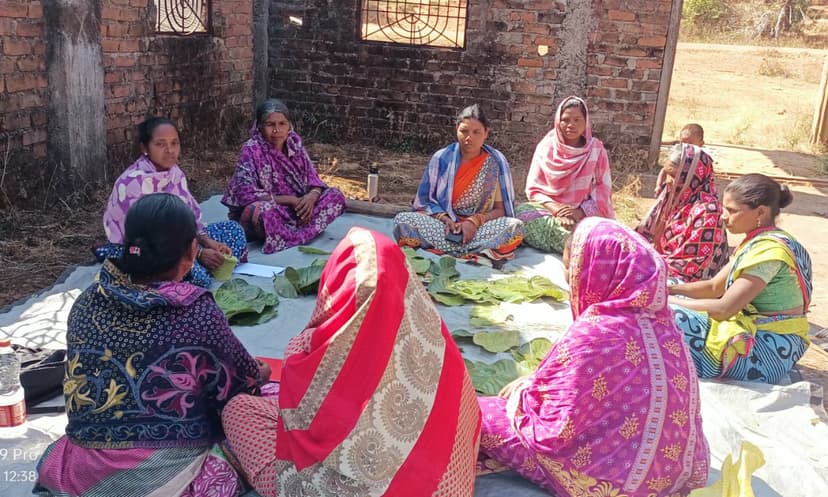
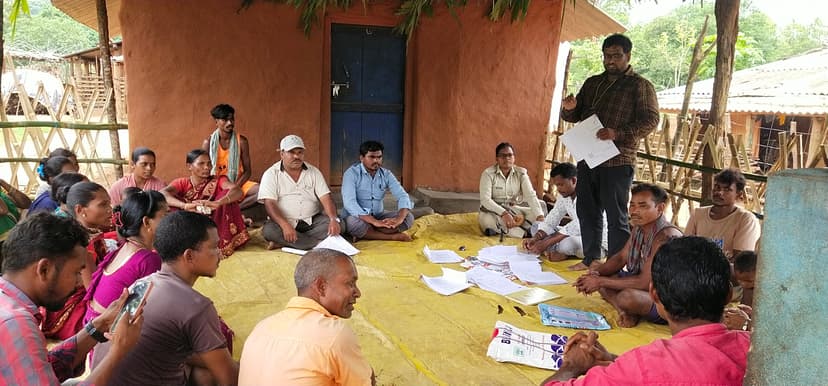
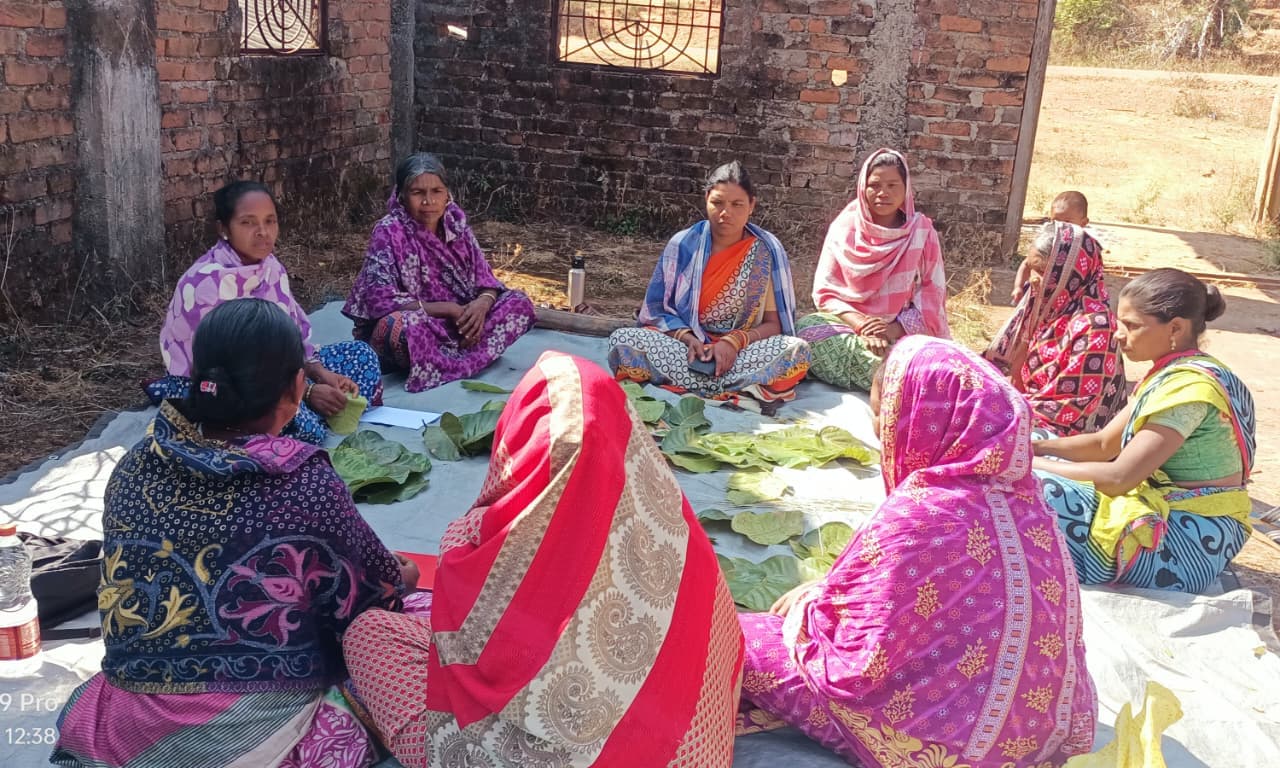
During the reporting year, Jagruti implemented a structured capacity-building initiative for Community Forest Resource Management Committees (CFRMCs) across three Gram Panchayats Badapanaga, Danekbadi, and Sonpur through four training programmes conducted on different dates. A total of 172 participants attended these sessions, including 168 Scheduled Tribe (ST) members and 4 Other Traditional Forest Dwellers (OTFD), with a gender composition of 97 men and 75 women, ensuring inclusive community participation.
The training aimed to strengthen the institutional capacity of CFRMC members by enhancing their understanding of Community Forest Resource Management (CFRM) and their roles and responsibilities in the governance, protection, and sustainable use of forest resources.
Key focus areas included the preparation of Community Forest Resource (CFR) maps, identification and demarcation of customary village boundaries, and facilitation of joint meetings with neighboring committees to ensure clarity and consensus on shared boundaries. Participants were also trained on the preparation and implementation of Community Forest Resource (CFR) Management Plans, with emphasis on participatory planning, resource mapping, conservation strategies, and livelihood integration.
Special emphasis was placed on coordination with Forest and Revenue Department officials, including processes of joint verification to ensure transparency and alignment with applicable guidelines. Participants were further guided on conducting Gram Sabha meetings for planning, validation, and approval of CFR Management Plans.
The training reinforced the importance of strong community institutions and the central role of Gram Sabhas in ensuring participatory and sustainable forest management. Overall, the initiative strengthened the capacity of CFRMC members to effectively manage forest resources and contributed to improved community-led forest governance in the intervention areas.
Overall, the initiative strengthened the capacity of CFRMC members to effectively manage forest resources and contributed to improved community-led forest governance in the intervention areas.
Date | Particulars of training | Members attended | ||||
Male | Female | ST | OTFD | Total | ||
10th & 11th Oct 2025 | Training programme for CFRMC members on CFR Management | 22 | 19 | 39 | 2 | 41 |
17th & 18th Oct. 2025 | Training programme for CFRMC members on CFR Management | 23 | 16 | 38 | 1 | 39 |
3rd & 4th Dec 2025 | Training programme for CFRMC members on CFR Management | 0 | 40 | 40 | 0 | 40 |
5th & 6th Dec 2025 | Training programme for CFRMC members on CFR Management | 52 | 0 | 51 | 1 | 52 |
Total | 97 | 75 | 168 | 4 | 172 | |
3. Exposure Visit and Strengthening of Community Forest Governance
As part of its capacity-building initiatives, Jagruti organized a three-day exposure visit from 12–14 January 2026 to Kalahandi district. A total of 15 participants, all belonging to Scheduled Tribe (ST) communities, including members of Forest Rights Committees (FRCs) and Gram Panchayat Federation representatives, participated in the visit.
The primary objective of the exposure visit was to enhance participants’ understanding of Community Forest Resource (CFR) management, forest-based livelihoods, market access, and the role of community institutions and federations. The visit provided practical exposure to successful models of community-led forest governance.
Participants visited Jamjhori and Palaki villages under Junagarh block, where they interacted with Gram Sabha members and observed post-rights recognition processes, particularly in relation to Community Rights (CR) and Community Forest Resource (CFR). They gained first-hand insights into systems for forest protection, sustainable resource use, and collective decision-making.
A key focus area was the management and marketing of Minor Forest Produce (MFP), including bamboo and kendu leaves. Participants learned how Gram Sabhas and federations collectively manage forest produce and access markets under Minimum Support Price (MSP) provisions, contributing to improved livelihoods and food security.

4. Land demarketed and RoR distributed and approved IFR
Land demarcation activities were successfully carried out in three villages—Gadadi, Sitapanga, and Danekbadi—as part of the implementation of the Forest Rights Act (FRA). The process was conducted in the presence of key stakeholders, including the Revenue Inspector (RI), Amin, Forest Officer, Field Guide, Forest Rights Committee (FRC) members, and Gram Sabha representatives, ensuring transparency, accuracy, and community participation.
The demarcation exercise involved verification of claims on the ground, boundary identification, and validation of land parcels in accordance with FRA provisions. Active involvement of Gram Sabha members and FRC representatives played a critical role in facilitating the process and ensuring that the claims were accurately represented and verified.
Following the completion of the demarcation process, a total of 251 Record of Rights (RoR) were formally distributed to the beneficiaries by the Tahasildar and FRA Coordinator. The distribution of RoRs marked a significant step towards securing legal land tenure for forest-dwelling communities and strengthening their access to rightful entitlements.
In the same 72 new IFR approved at DLC of Gadadi, Sitapanga and Simanbadi, yet to be received.
5. GPS Mapping completed:
GPS Mapping Activity under the Forest Rights Act (FRA)
A GPS mapping exercise was conducted in five villages—Didrabadi, Gosapanga, Kutimaha,, Sitapanga and Satungia—as part of the implementation process under the Forest Rights Act (FRA). The activity also saw the active participation of neighbouring villagers, which helped ensure accuracy and mutual understanding of land boundaries.
The exercise was carried out in the presence of representatives from all concerned line departments and stakeholders, including the Revenue Inspector (RI), Amin, Forest Guide, Gram Sabha members, and NGO partners. This collaborative approach ensured transparency, accountability, and effective coordination among departments and community institutions.
The GPS mapping process involved on-ground verification and mapping of land parcels to support the recognition and documentation of forest rights claims. Participation of neighbouring villagers played a key role in resolving boundary-related concerns and validating the extent of land under individual and community claims.
6. Social Security Scheme Facilitation through Bhima Bhoi Samarthya Sibira
As part of efforts to strengthen access to social security schemes, two Bhima Bhoi Samarthya Sibira (disability assessment camps) were organized in collaboration with Block Daringbadi to identify and support persons with disabilities in accessing entitlements.
A total of 949 individuals were registered across the two camps. Following assessment, 653 beneficiaries were issued disability certificates, thereby becoming eligible to avail benefits under various social security pension schemes.
Additionally, 14 individuals were registered for pension benefits during the same period, facilitating their inclusion in the social security system.
The camps played a critical role in ensuring doorstep service delivery, streamlining the process of disability assessment and certification, and strengthening convergence between line departments at the block level. The initiative also enhanced community awareness regarding available entitlements and promoted inclusion of eligible beneficiaries.
7. Community-Based Forest Management Plans Developed and Submitted (2025–2026)
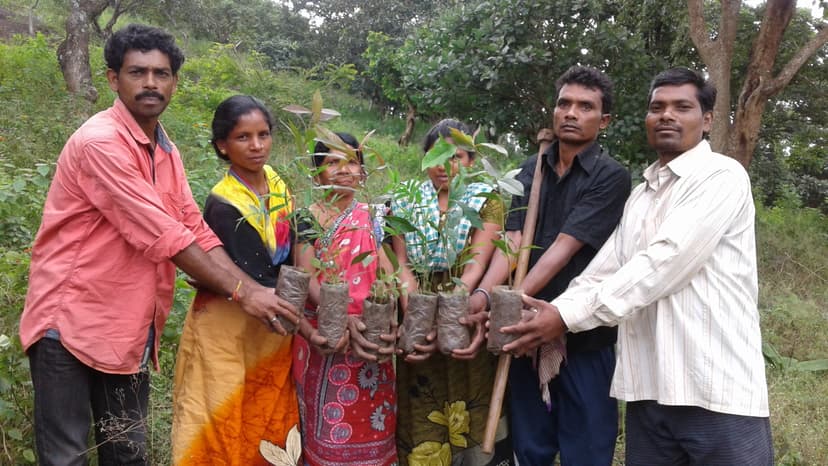
During the reporting period 2025–2026, Community-Based Forest Management Plans were developed and submitted for 38 villages across Danekbadi (8), Sonpur (14), and Badabanga (16) Gram Panchayats, with active participation of Gram Sabhas and Community Forest Resource Management Committees (CFRMCs).
The plans emphasize sustainable forest management, conservation of key multipurpose species, and strengthening the livelihoods of forest-dependent communities. It is estimated that 2000–2500 households will benefit, covering approximately 3,000–5,000 hectares of forest area.
Following the submission and initial implementation of these plans, communities have begun improved management of Minor Forest Produce (MFP). Early outcomes indicate enhanced income opportunities and strengthened community-led forest governance through the active engagement of 38 CFRMCs.
Three-Day PRI Training Programmes on the Forest Rights Act (FRA)
Two three-day training programmes on the Forest Rights Act (FRA) were successfully conducted for Panchayati Raj Institution (PRI) members on 8–10 January 2025 and 20–22 February 2025. The programmes covered participants from Badapanaga, Sonpur, and Danekbadi Gram Panchayats.
A total of 80 PRI members, including Ward Members and Sarpanches, participated in the trainings. Among them, 66 participants belonged to Scheduled Tribes (ST) and 14 were Other Traditional Forest Dwellers (OTFD). The gender distribution comprised 58 male and 22 female participants.
The primary objective of the programmes was to strengthen the capacity of PRI members as key stakeholders in local governance and the effective implementation of the FRA. The sessions provided comprehensive orientation on the key provisions of the Act, including the recognition of Individual Forest Rights (IFR), Community Rights (CR), and Community
Forest Resource Rights (CFR). Emphasis was placed on enhancing participants’ understanding of their roles in facilitating the rights recognition process at the grassroots level.
Project Gallery